 EN
EN
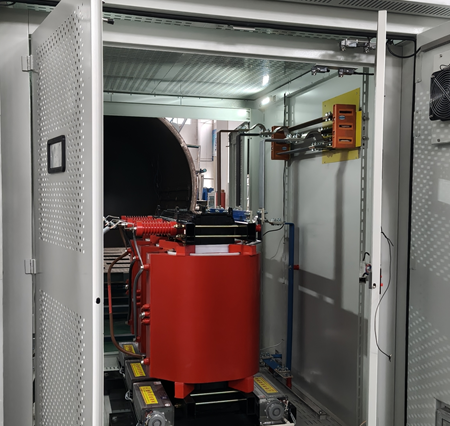
Choosing between an EI transformer—sometimes called a square or laminated transformer—and a toroidal transformer requires more than comparing price and rated power. The right choice depends on installation space, electromagnetic interference, efficiency, thermal performance, inrush current, safety requirements, and the operating environment.
This guide explains the practical differences between EI and toroidal transformers and helps engineers, purchasing teams, and equipment manufacturers select the most suitable design.
What Is an EI Transformer?
An EI transformer uses laminated steel sheets shaped like the letters “E” and “I.” The windings are placed on a bobbin fitted around the center leg of the magnetic core.
EI transformers are widely used because they are:
- Cost-effective and easy to manufacture
- Mechanically robust
- Available in many standard dimensions
- Easy to customize with multiple windings, taps, shields, and mounting options
- Suitable for industrial controls, appliances, power supplies, and audio equipment
Because the laminated core has joints and a less continuous magnetic path, an EI transformer generally produces more stray magnetic flux than a comparable toroidal transformer. Its actual efficiency and temperature rise depend on core material, flux density, winding design, load profile, and manufacturing quality.
What Is a Toroidal Transformer?
A toroidal transformer uses a ring-shaped magnetic core around which the primary and secondary windings are distributed.
Its continuous magnetic path can provide:
- Low magnetic leakage
- Low no-load loss
- High efficiency
- Compact dimensions
- Low mechanical hum when properly designed and installed
- Good performance near sensitive electronic circuits
Toroidal transformers can, however, be more difficult to wind and assemble. They may also experience high switch-on current under certain conditions, especially at higher power ratings or when energized near an unfavorable point on the AC waveform.
EI vs. Toroidal Transformer: Key Differences
| Selection factor | EI transformer | Toroidal transformer |
|---|---|---|
| Magnetic leakage | Usually higher | Usually lower |
| Efficiency | Moderate to high, depending on design | Often higher for a comparable rating |
| No-load loss | Generally higher | Generally lower |
| Size and weight | Usually larger and heavier | Often more compact |
| Manufacturing cost | Usually lower | Usually higher |
| Inrush current | Often easier to manage | Can be significantly higher |
| Mounting | Frames, brackets, PCB pins, or chassis mounting | Center-bolt, resin-center, or potted mounting |
| Custom winding flexibility | Excellent | Excellent, but production is more complex |
| Suitability near sensitive circuits | May require shielding or greater spacing | Often preferred because of lower stray flux |
| Mechanical robustness | Simple, proven construction | Requires careful mounting and insulation protection |
These are general tendencies rather than universal rules. A well-designed EI transformer can outperform a poorly designed toroidal unit. The supplier’s engineering capability and quality control therefore matter as much as the core shape.
When Should You Choose an EI Transformer?
An EI transformer is often the better option when cost, durability, and manufacturing flexibility are the main priorities.
1. Cost-sensitive equipment
EI construction is mature and suitable for efficient series production. It is commonly selected for:
- Household appliances
- Industrial control equipment
- Security systems
- HVAC controllers
- General-purpose linear power supplies
2. Equipment exposed to frequent switching
EI transformers often have more manageable inrush characteristics, although this must still be confirmed from the actual design. They can be a practical choice for equipment that is switched on and off frequently.
3. Products with sufficient installation space
When enclosure height, footprint, and weight are not critical, an EI transformer can provide a reliable solution at a competitive cost.
4. Designs requiring flexible mounting
EI transformers can be manufactured with PCB pins, lead wires, mounting frames, terminal blocks, thermal fuses, electrostatic shields, and customized brackets.
5. Selected audio applications
EI transformers remain popular in tube amplifiers and other traditional audio designs. Claims that a transformer core shape creates a particular “warm” or “hard” sound should be treated carefully, however. Audible performance is primarily influenced by regulation, shielding, grounding, power-supply design, magnetic coupling, and the complete amplifier circuit.
When Should You Choose a Toroidal Transformer?
A toroidal transformer is usually preferred when compact construction, low magnetic leakage, and energy efficiency are important.
1. Audio and low-noise electronics
Low stray magnetic flux can reduce the risk of hum being coupled into nearby signal circuits. Toroidal transformers are therefore widely used in:
- Hi-Fi amplifiers
- Preamplifiers
- Recording equipment
- Laboratory instruments
- Sensitive analog electronics
Careful transformer placement, grounding, shielding, and cable routing are still necessary.
2. Space-constrained products
The low-profile shape of a toroidal transformer can be useful in slim enclosures, rack-mounted equipment, and compact power systems. The actual space advantage depends on the required voltage regulation, insulation system, temperature rise, and mounting method.
3. Continuously energized equipment
Low no-load loss can make a toroidal transformer attractive for equipment that remains powered for long periods. To evaluate real energy savings, compare measured no-load loss and efficiency at the intended operating load—not only the rated efficiency.
4. Applications requiring low electromagnetic interference
Toroidal construction is helpful when a transformer must be installed near signal-processing or measurement circuits. Additional magnetic or electrostatic shielding may still be required for especially sensitive applications.
5. Designs with strict weight requirements
A toroidal transformer can often deliver the required power in a smaller and lighter package than a conventional EI design. Final weight must be verified using an engineering drawing and production specification.
Important Design Factors Beyond Core Shape
Core construction should not be the only selection criterion. Before ordering a transformer, define the following parameters.
Input voltage and frequency
Specify the nominal input voltage, allowable variation, and operating frequency. A transformer designed for 60 Hz should not automatically be used at 50 Hz without engineering verification because the lower frequency can increase core flux and temperature.
Output voltage and current
Provide the required secondary voltages, continuous current, peak current, load duration, and permitted voltage regulation. Multiple secondary windings and center-tapped outputs can be customized when required.
Load profile
A transformer powering a steady resistive load is designed differently from one feeding a rectifier, capacitor-input power supply, motor, amplifier, or intermittent load.
Temperature rise and insulation class
The allowable winding temperature depends on ambient temperature, ventilation, enclosure conditions, insulation system, and expected service life. Do not select a transformer solely by volt-ampere rating.
Inrush-current protection
Larger toroidal transformers may require:
- A time-delay fuse
- An NTC inrush-current limiter
- A series-resistor bypass circuit
- Zero-crossing or controlled-start electronics
- A soft-start module
Protection components must be selected according to measured inrush behavior and the applicable safety requirements.
Magnetic and electrostatic shielding
An electrostatic shield between the primary and secondary can help reduce capacitive noise transfer. External magnetic shielding may be used when the transformer operates close to highly sensitive circuits.
Safety and regulatory requirements
Clearly identify the destination market and applicable product standards. Requirements may cover:
- Reinforced or double insulation
- Creepage and clearance distances
- Dielectric strength
- Thermal protection
- Flammability ratings
- Earthing arrangements
- RoHS or other material restrictions
- Certification for the finished application
Regulatory compliance should be verified against the final transformer design and the end-product standard.
A Simple Selection Guide
Choose an EI transformer if your project prioritizes:
- Lower initial cost
- Proven, robust construction
- Flexible mounting and termination
- Easier production for standard industrial equipment
- Adequate enclosure space
Choose a toroidal transformer if your project prioritizes:
- Low stray magnetic flux
- Compact size and low-profile construction
- Low no-load loss
- High efficiency
- Installation near sensitive audio or measurement circuits
If both options appear suitable, request engineering samples and compare temperature rise, regulation, no-load current, inrush current, acoustic noise, and EMI performance under actual operating conditions.
Frequently Asked Questions
Is a toroidal transformer always better than an EI transformer?
No. A toroidal transformer may offer lower magnetic leakage and no-load loss, but it can cost more and may require additional inrush-current protection. EI transformers remain an effective choice for many industrial, commercial, and consumer products.
Which transformer is better for an audio amplifier?
Toroidal transformers are frequently chosen because their low stray magnetic field can help reduce hum. An EI transformer can also perform well when it is correctly specified, positioned, shielded, and integrated into the grounding system.
Which type is more energy-efficient?
A toroidal transformer is often more efficient, particularly regarding no-load loss. Efficiency should nevertheless be compared at the expected operating load using supplier test data.
Can both types be customized?
Yes. EI and toroidal transformers can be customized for input voltage, output voltage, current, VA rating, frequency, insulation class, temperature rise, lead wires, terminals, shielding, mounting, and thermal protection.
What information should I provide when requesting a quotation?
For an accurate proposal, provide:
- Input voltage and frequency
- Required secondary voltage or voltages
- Continuous and peak output current
- Load type and duty cycle
- Maximum dimensions and weight
- Ambient temperature and cooling conditions
- Mounting and connection requirements
- Insulation and safety requirements
- Target market and required certifications
- Estimated order quantity
Custom EI and Toroidal Transformers from Dingxin
Dingxin is a manufacturer of transformers and transformers for the European market, offering customized EI and toroidal transformer solutions based on customers’ electrical, mechanical, thermal, and regulatory requirements.
Whether your project requires a cost-effective EI transformer, a compact low-leakage toroidal transformer, multiple secondary windings, special mounting, shielding, thermal protection, or European voltage specifications, Dingxin can develop a transformer that matches your target parameters.
Start Your Custom Transformer Project
Send Dingxin your input voltage, output requirements, rated power, dimensions, operating environment, certification needs, and expected quantity. Our team can review your specifications and recommend the most appropriate transformer construction for your application.
Contact Dingxin today to request a technical evaluation, customized design, or quotation for your EI or toroidal transformer project.
Table of Contents
- What Is an EI Transformer?
- What Is a Toroidal Transformer?
- EI vs. Toroidal Transformer: Key Differences
- When Should You Choose an EI Transformer?
- When Should You Choose a Toroidal Transformer?
- Important Design Factors Beyond Core Shape
- A Simple Selection Guide
- Frequently Asked Questions
- Custom EI and Toroidal Transformers from Dingxin