Tel: +86-513-88779999
Email: [email protected]
Tel: +86-513-88779999
Email: [email protected]
When selecting a distribution transformer, one of the first decisions is whether to use an oil-immersed transformer or a dry-type transformer. Both types are widely used in electrical power distribution, but they have different insulation systems, cooling methods, installation considerations, and maintenance requirements.
The right choice depends on the project location, load requirements, fire safety regulations, environmental conditions, and total cost of ownership.
This guide explains the main differences between oil-immersed and dry-type transformers to help engineers, contractors, and international buyers make an informed decision.
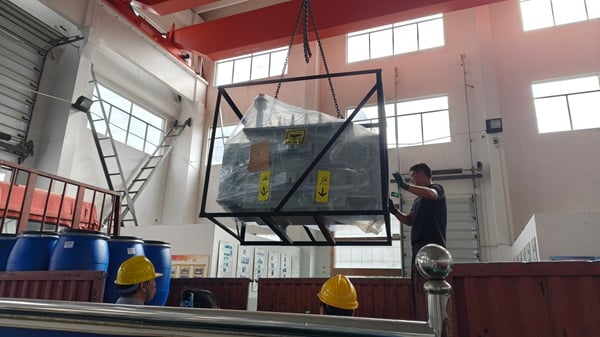
An oil-immersed transformer uses insulating liquid to provide electrical insulation and transfer heat away from the core and windings.
The transformer core and windings are housed inside a tank filled with insulating liquid. During operation, heat generated by electrical losses is transferred to the liquid and then dissipated through the tank surface or cooling equipment.
Many distribution transformers use ONAN cooling, which means Oil Natural Air Natural. In this arrangement, oil circulates naturally inside the transformer, while heat is released to the surrounding air through the tank or radiators.
Oil-immersed transformers are commonly used in utility distribution networks, outdoor substations, industrial power systems, and renewable energy projects.
Liquid insulation and heat transfer
Tank-based construction
Natural or forced cooling options, depending on design
Suitable for many outdoor distribution applications
Available in a wide range of distribution and power ratings
Requires attention to tank sealing, liquid condition, and applicable fire and environmental requirements
A dry-type transformer uses solid insulation systems rather than an insulating liquid as its primary cooling and insulation medium.
The windings are insulated using materials such as resin or other solid insulation systems. Heat is transferred to the surrounding air through natural or forced air circulation.
Cast-resin dry-type transformers are commonly used in commercial buildings, hospitals, industrial facilities, and indoor substations where liquid-filled equipment may be restricted by the project design or local regulations.
Solid insulation system
Air-based cooling
No insulating-liquid tank
No risk of insulating-liquid leakage
Requires suitable ventilation and temperature management
Often selected for indoor installations, subject to enclosure and fire-safety requirements
| Comparison Factor | Oil-Immersed Transformer | Dry-Type Transformer |
|---|---|---|
| Insulation medium | Insulating liquid | Solid insulation |
| Cooling medium | Oil or other specified insulating liquid | Air |
| Heat transfer | Natural or forced liquid circulation | Natural or forced air circulation |
| Construction | Core and windings inside a liquid-filled tank | Core and windings with solid insulation |
| Liquid leakage | Requires tank integrity and leak-risk management | No insulating-liquid leakage |
| Fire considerations | Depends on liquid type, installation, and containment measures | No insulating liquid, but winding materials and installation still have fire considerations |
| Maintenance | Includes tank, liquid, seals, and accessories where applicable | Includes cleaning, ventilation, connections, and insulation condition |
| Typical applications | Utility distribution, outdoor substations, industrial networks | Commercial buildings, indoor substations, selected industrial facilities |
The comparison above describes common designs. Actual performance, safety, and maintenance requirements depend on the transformer construction, insulation system, enclosure, installation conditions, and applicable standards.
There is no universal rule that every oil-immersed transformer is more efficient than every dry-type transformer, or vice versa.
Transformer efficiency depends on several design and operating factors:
Core material and core construction
Winding conductor material and design
No-load loss
Load loss
Rated capacity
Actual loading level
Cooling system and auxiliary power consumption
When comparing quotations, buyers should request guaranteed no-load and load loss values for the same rated capacity, voltage, frequency, and applicable test conditions.
It is also important to evaluate energy consumption over the expected operating life rather than comparing only the initial purchase price.
Dry-type transformers are frequently selected for indoor installations because they do not contain an insulating-liquid tank. This removes the need to manage liquid leakage and liquid containment.
However, a dry-type transformer is not automatically suitable for every indoor location. Designers must still consider:
Fire performance of the insulation system
Ventilation and heat dissipation
Enclosure protection
Ambient temperature
Installation clearance
Noise requirements
Local building and electrical regulations
Oil-immersed transformers can also be installed in appropriately designed locations when the project requirements, fire protection measures, containment arrangements, and applicable codes permit their use.
The final selection should follow the project's electrical and fire-safety design.
Maintenance requirements differ because the two transformer types use different insulation and cooling systems.
Depending on the design and operating conditions, maintenance may include:
Inspecting the tank and welds for leakage
Checking seals, valves, and bushings
Monitoring oil level and temperature indicators
Inspecting cooling surfaces and radiators
Testing insulating-liquid properties when required
Checking protective devices and electrical connections
Fully sealed designs may reduce exposure of the insulating liquid to outside air, but maintenance requirements should still follow the manufacturer's instructions and applicable maintenance standards.
Maintenance may include:
Removing dust and contamination from windings and ventilation passages
Checking cooling fans where fitted
Inspecting electrical connections
Checking insulation condition
Confirming that ventilation openings remain unobstructed
Monitoring operating temperature
Maintenance intervals should be determined by the manufacturer's documentation, site conditions, and operating history.
The selection depends on the installation environment and the electrical system.
Oil-immersed transformers are often considered for outdoor distribution networks, utility substations, industrial distribution, and renewable energy installations where liquid-filled transformer equipment is permitted and suitable.
Dry-type transformers are often considered for indoor substations, commercial buildings, hospitals, factories, and locations where project requirements favor equipment without insulating liquid.
For solar power plants, battery energy storage systems, and other renewable energy projects, the transformer must also match the inverter output, voltage level, duty cycle, harmonic conditions, protection scheme, and environmental requirements.
Before making a decision, confirm the following project information:
Installation location: Indoor, outdoor, underground, or within a dedicated substation.
Rated capacity: Required kVA or MVA based on the load calculation.
Voltage ratio: Primary and secondary voltage levels.
Frequency: 50Hz or 60Hz.
Cooling requirements: Natural or forced cooling.
Environmental conditions: Ambient temperature, altitude, humidity, dust, and corrosive exposure.
Fire and environmental regulations: Applicable local and project-specific requirements.
Loss requirements: Guaranteed no-load and load losses.
Maintenance plan: Available maintenance resources and inspection requirements.
Total cost: Purchase, installation, operation, maintenance, and expected service life.
Neither type is universally better. Oil-immersed and dry-type transformers serve different applications. The right choice depends on installation conditions, electrical requirements, safety regulations, and lifecycle cost.
Dry-type transformers eliminate insulating-liquid leakage risks and are often used indoors. However, fire performance, ventilation, enclosure, and local regulations must still be evaluated.
Efficiency depends on the actual transformer design and guaranteed losses. Compare no-load and load loss data under equivalent rating and test conditions instead of relying only on the transformer type.
Maintenance depends on the design and environment. Oil-immersed units may require liquid and tank inspections, while dry-type units require attention to dust, ventilation, and insulation condition.
Not automatically. Voltage, capacity, impedance, vector group, installation dimensions, cooling, protection, fire requirements, and local regulations must all be reviewed before replacement.
Jiangsu Dingxin Electric provides oil-immersed and dry-type transformer solutions for power distribution, industrial facilities, infrastructure, and renewable energy projects.
For an accurate recommendation, provide your project location, rated capacity, voltage ratio, frequency, installation environment, and applicable standards.
Contact Dingxin Electric to discuss your transformer requirements and request a technical proposal.

Jiangsu Dingxin Electric, a high-tech power equipment manufacturer, produces high-quality transformers and substations, serving global markets across 30+ countries.
Room 118, Building 8, 2999 Hutai Road, Baoshan District, Shanghai, China


Copyright © Jiangsu Dingxin Electric Co., Ltd. All Rights Reserved | Privacy Policy
 EN
